
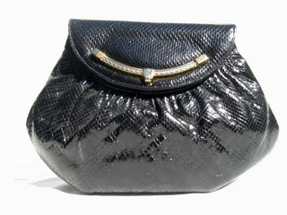
Posted by Lisa Corbett Thurber on Sep 29th 2026
Mid-Century Atelier Names: Quality Markers in Vintage Bags
When I open a shipment and spot certain names stamped inside a vintage bag, my pulse quickens. Lucille de Paris. Martin Van Schaak. Finesse La Model. These weren't just retailers—they were mid-century American ateliers and specialty houses that demanded meticulous hand-finishing, premium skins, and construction techniques that have outlasted decades. In 2026, as I continue curating vintage alligator and crocodile bags and lizard skin treasures, I'm reminded that these house names remain the most reliable markers of quality you can find—no certifications needed, just the evidence of time itself.
Today I want to share what makes these ateliers special, how to recognize their hallmarks, and introduce you to eight extraordinary examples currently in the shop. Think of this as your field guide to the names that mattered—and still do.
Lucille de Paris: The Jewel-Box Standard
Lucille de Paris operated from the 1940s through the 1970s, specializing in evening bags that doubled as jewelry. Their signature? Alligator belly skin (the softest, most coveted cut), hand-set rhinestones or cabochons, and interior frames so precisely engineered they still snap crisply today. When you see "Lucille de Paris" stamped in gold script inside a bag, you're holding a piece that was sold at the finest department stores and intended for women who understood the difference between accessory and heirloom.
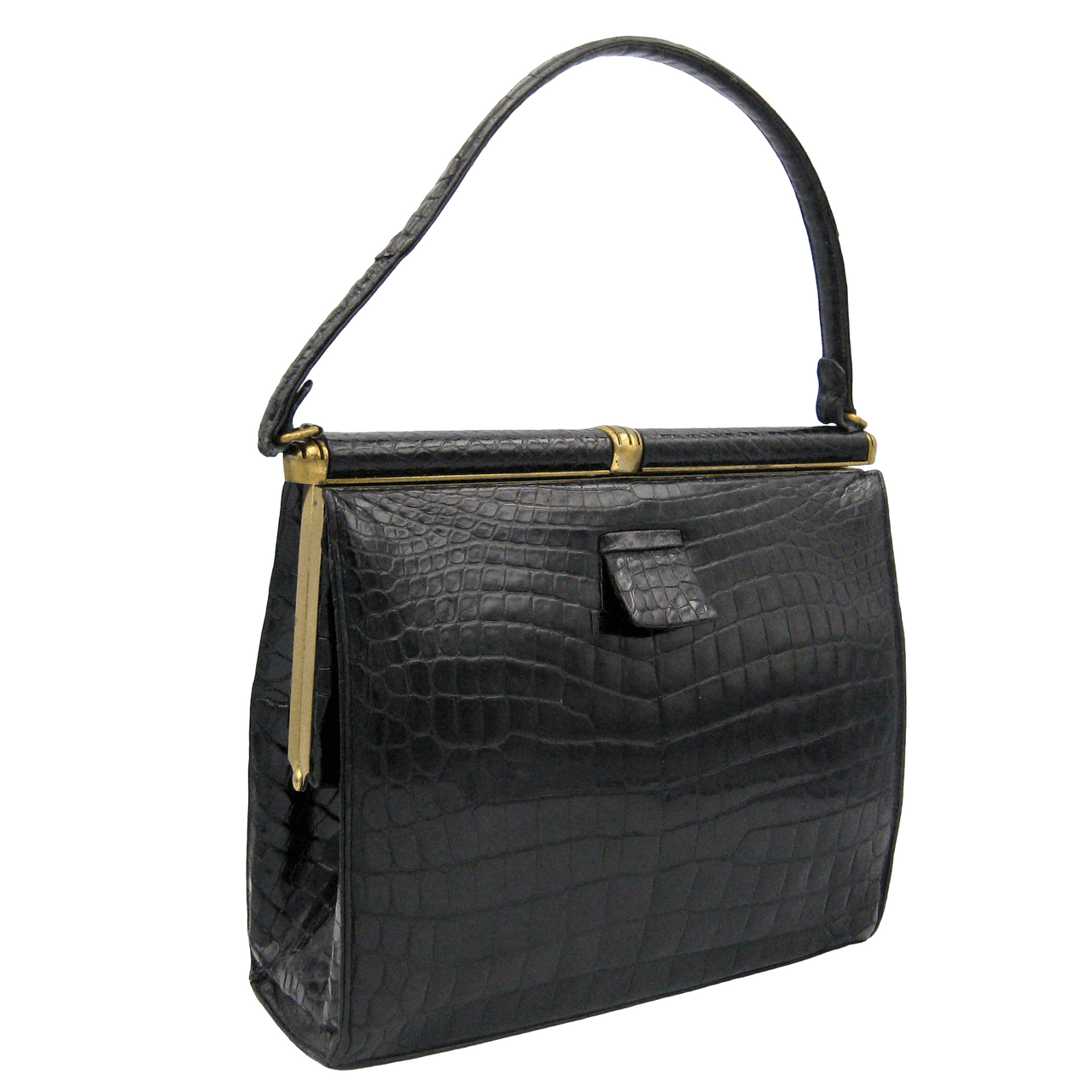
The tight, even tile of belly scales marks this Classic BLACK 1960's LUCILLE de PARIS Alligator Belly Handbag as center-cut work—the most coveted section of the hide, where pattern symmetry and scale uniformity were proof of the cutter's skill and the atelier's willingness to invest in prime skins.
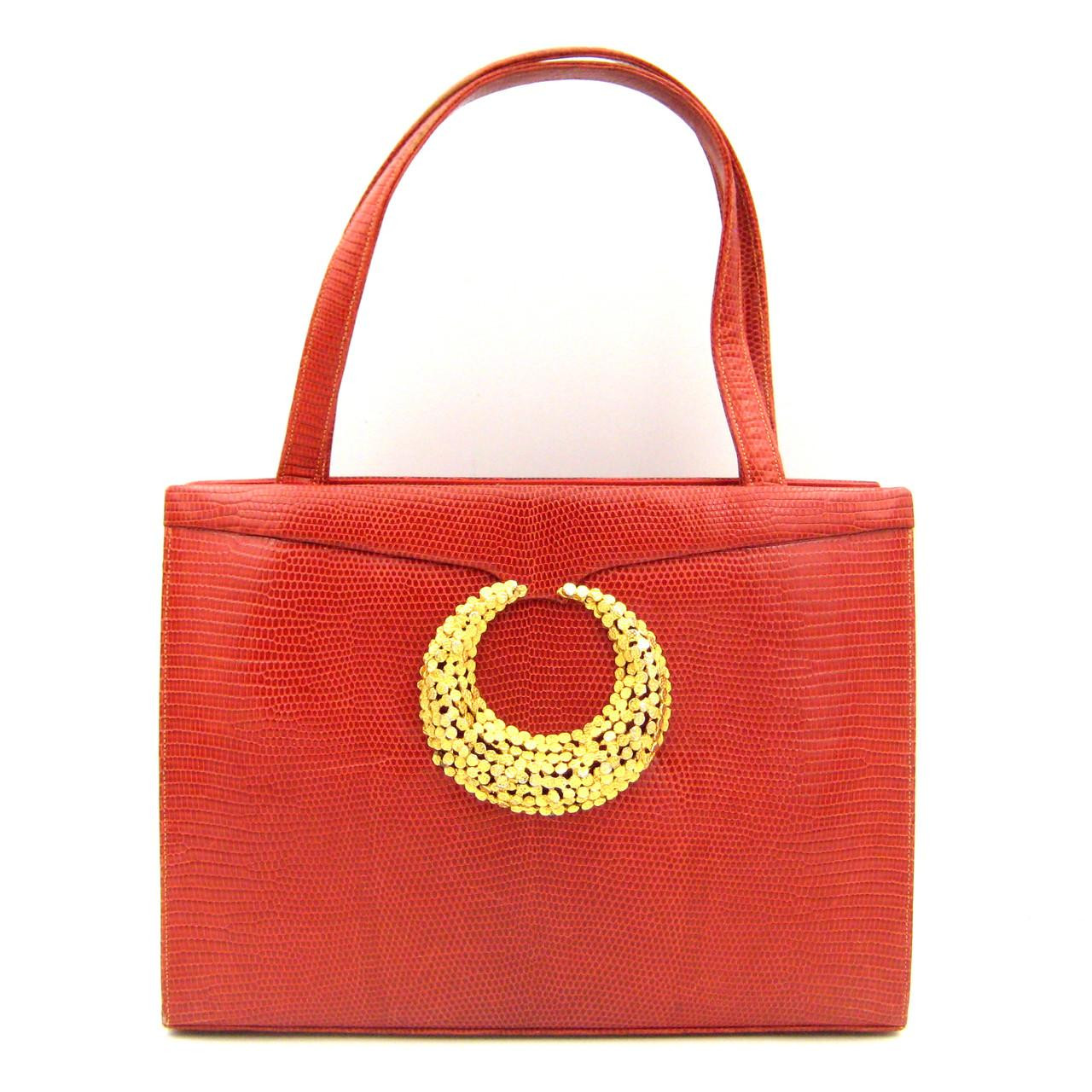
Martin Van Schaak's signature was the unexpected detail—here, a sculptural jeweled clasp crowns genuine lizard skin dyed in a saturated mandarin orange that could only come from a house confident enough to pair precious materials with pure, unapologetic color. This Stunning Orange Jeweled Martin Van Schaak Lizard Handbag captures the atelier's ethos: refined exotics treated with the boldness of fine jewelry, a combination that made Van Schaak a go-to for women who wanted craft and statement in equal measure.
Martin Van Schaak: The St. Louis Legend
Martin Van Schaak was a luxury furrier and leather goods house based in St. Louis, Missouri, from the late 1800s through the 1970s. Their exotic skin bags—especially lizard and snake—were crafted with a furrier's attention to pelt selection and matching. I look for tight, uniform scale patterns and linings that were often suede or silk. The construction is surgical: edges turned so cleanly you'd need a magnifying glass to find the seam.
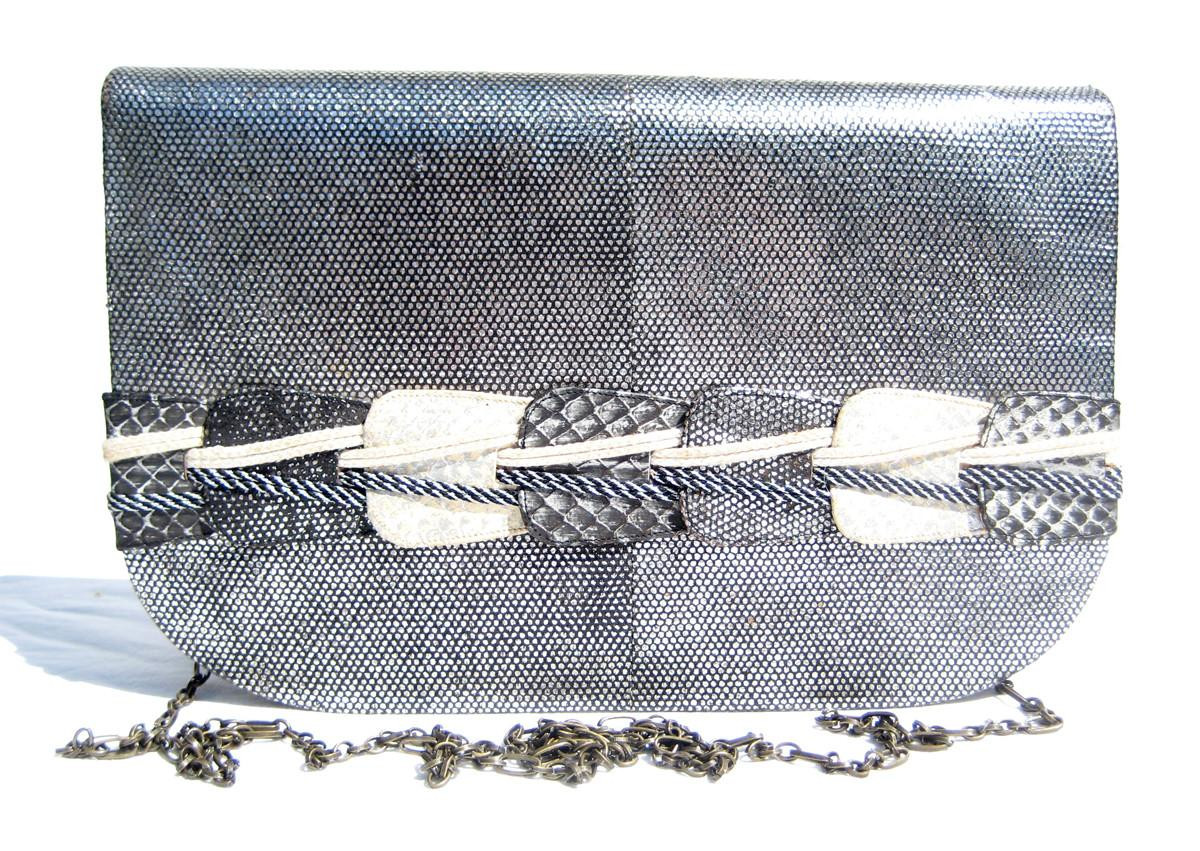
Andrea Pfister earned her place among the era's most discerning artisans by treating exotic skins—particularly python—with a jeweler's eye for finish and a sculptor's respect for structure. This metallic silver-gray and black 1980s snake skin clutch carries her hallmark: a high-gloss, hand-burnished surface that catches light like hammered pewter, paired with precision-folded edges that hold their geometry decades later.
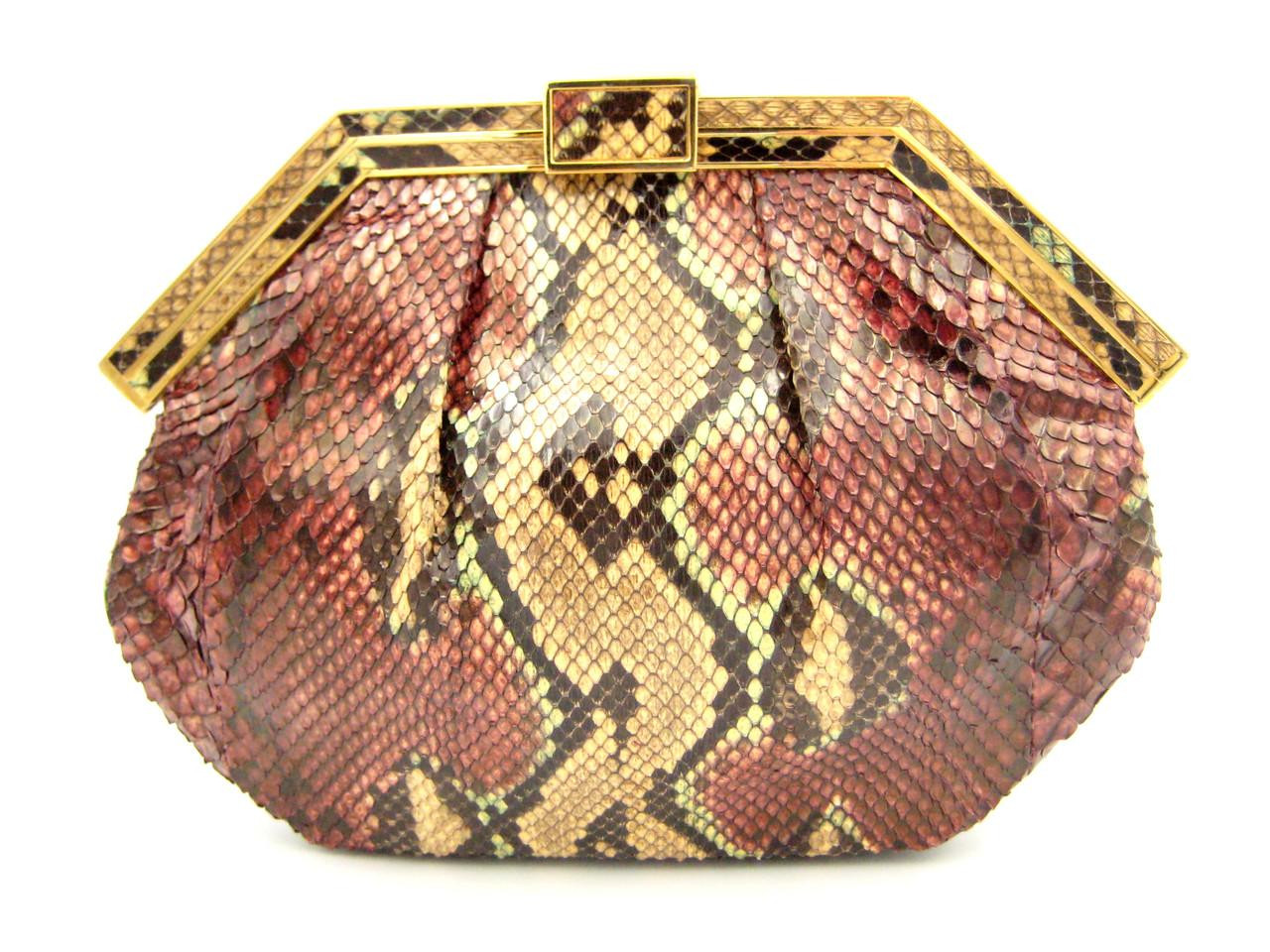
Colombetti built its reputation on exceptional python work, and this rose, green, and tan python shoulder bag demonstrates why the atelier remained a quiet favorite through the 1990s—the tri-color gradient shows full belly scales with none of the piecing shortcuts that marked less careful houses, and the convertible strap lets it move from crossbody day wear to close-held evening without compromise.
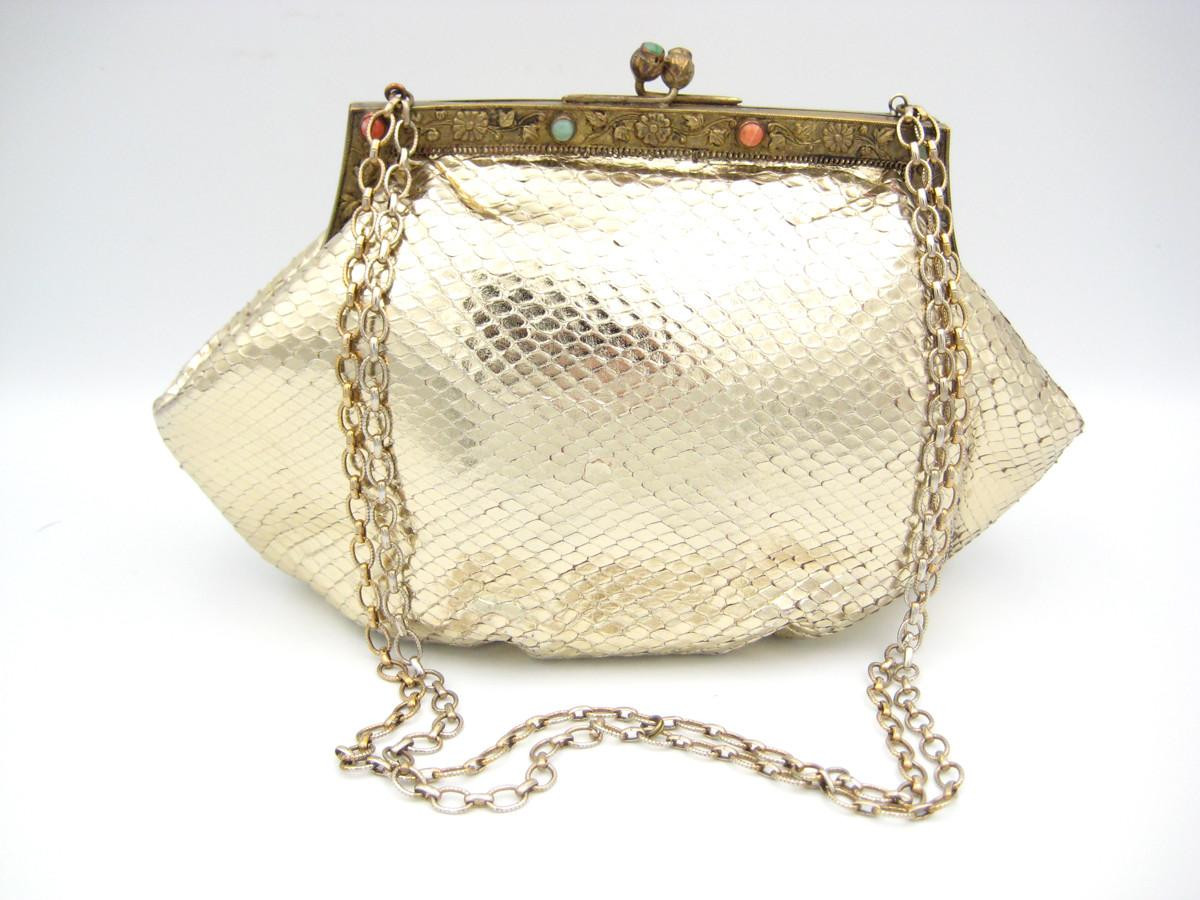
Jacomo Paris brought Parisian glamour to the American evening bag market in the 1960s, and this metallic gold snakeskin clutch with jeweled clasp captures that transatlantic sophistication—the kind of piece that elevated cocktail hour into ceremony.
Finesse La Model: The California Dreamer
Finesse La Model was a Los Angeles-based label active from the 1960s through the 1980s, and they specialized in karung (Indonesian water snake) and python in fashion-forward silhouettes. Their bags tend toward sleek, minimalist lines—clutches with chain straps, envelope styles, colors beyond the standard black and brown. The karung they sourced has a distinctive matte finish and a geometric scale pattern that photographs like modern art.
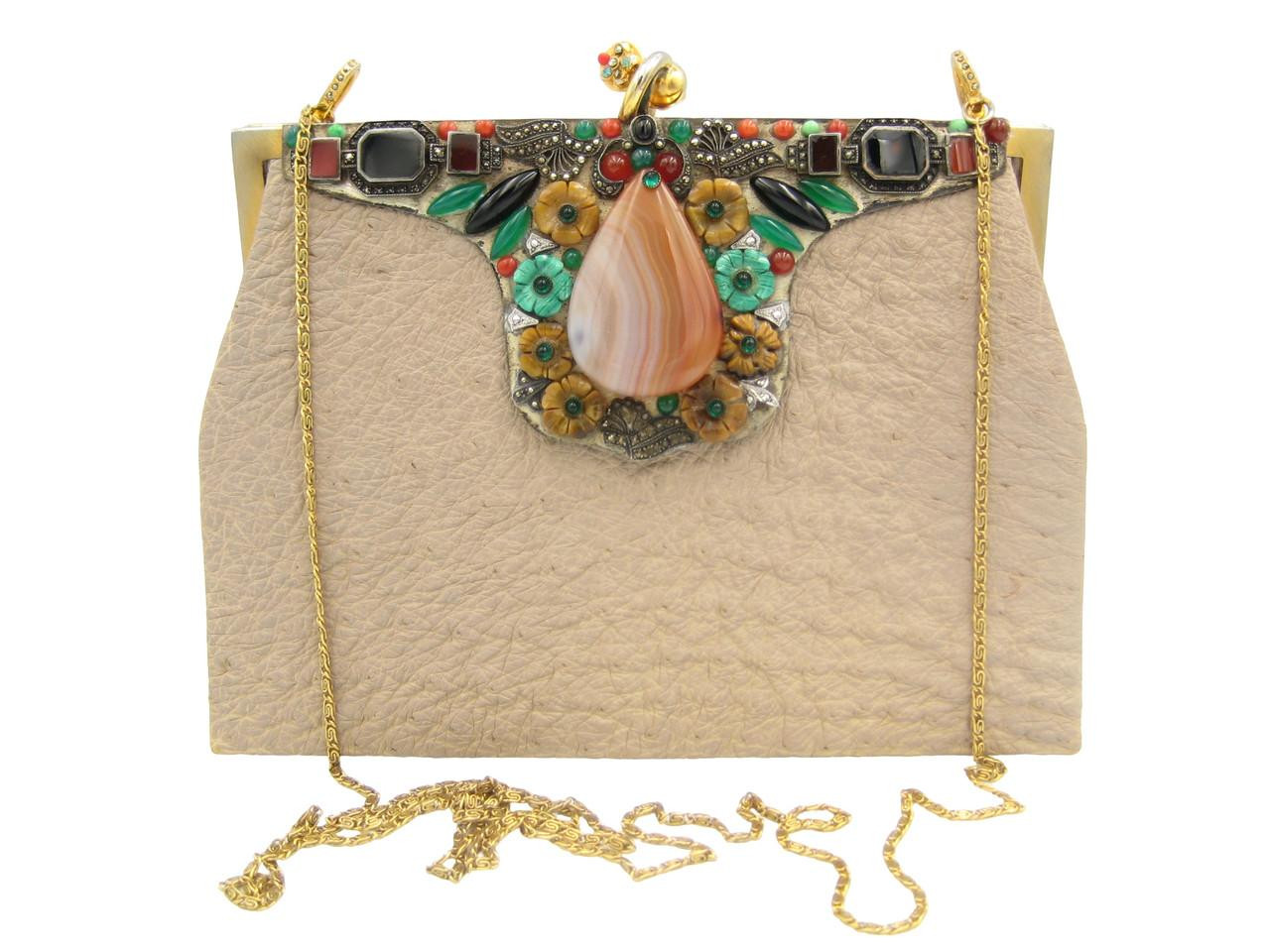
La Jeunesse built its name on true exotics—this nude jeweled ostrich shoulder bag shows the atelier's knack for pairing supple South African skins with unexpectedly glamorous hardware, turning a daytime silhouette into something cocktail-ready.
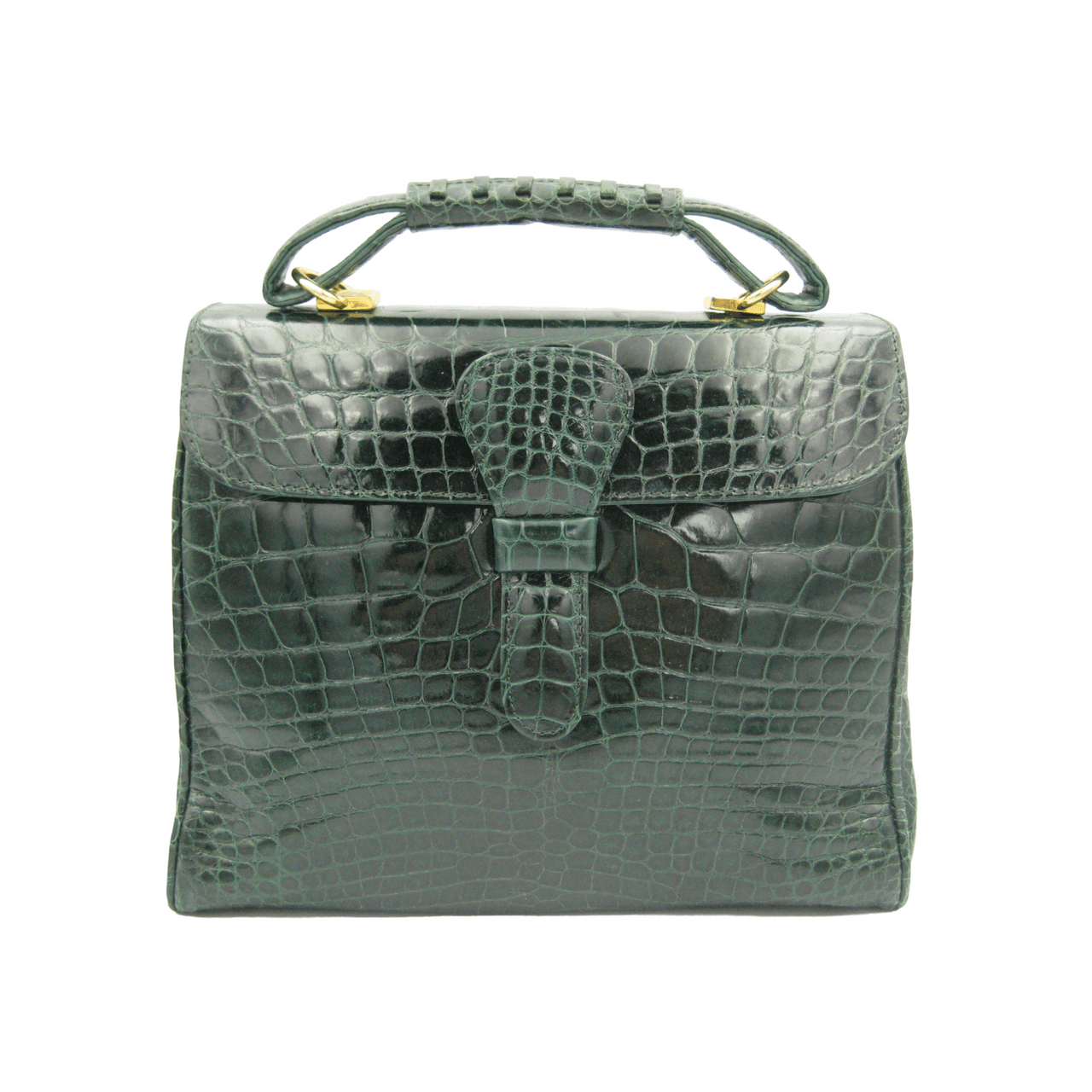
Maxima—an Italian atelier working at the tail end of the century—understood that American clients still wanted the oversized proportions and saturated color that defined luxury in the 1980s and '90s, and this XL green alligator belly satchel delivers both with the kind of unapologetic glamour that belongs on a transatlantic flight or in the back seat of a town car.
Beyond the Big Names: Italian Craft
Not every superb bag bears an American atelier name. Italy's leather workshops have produced sublime work for generations, often with maker's marks that are subtle or even absent. What matters is the evidence in your hands: hand-stitching, precisely matched hornback tiles, hardware that operates like a Swiss watch.

San Francisco's Koret built its reputation on precision leatherwork that rivaled the finest European houses, and this 1940s-50s alligator shoulder bag shows exactly why—the tile pattern is symmetrical across every panel, the glazed finish highlights each scale's natural relief, and the matching coin purse proves the atelier's commitment to cohesive luxury.
What to Look For
When you're examining a vintage bag—whether from one of these houses or an unknown maker—here's what I check: Interior stamps or labels in good condition. Hardware that still functions smoothly (no bent clasps or frozen hinges). Stitching that's even and intact. Skin that shows natural aging (patina, slight softening) rather than cracking or flaking. And symmetry—were the skins carefully matched, or slapped together? The houses I've featured today never slapped.
These atelier names aren't just nostalgia. They're shorthand for standards that have largely disappeared from modern manufacturing: the selection of premium belly cuts, the hand-dyeing that achieved depth modern processes can't replicate, the expectation that a handbag should last not just years but generations. When you invest in one of these pieces, you're not just buying vintage—you're buying proof.
I invite you to explore these eight beauties and the rest of our collection. Each one tells the story of an era when a maker's name was a promise kept. And a care tip as we head into winter: avoid prolonged exposure to dry indoor heat, which can stiffen exotic skins—a light conditioning with a reptile-safe cream once or twice a season will keep these treasures supple for the next sixty years.
— Lisa Corbett Thurber, founder of Vintage Skins. Curating vintage exotic leather since 2004.
Keep Exploring
Shop the collection: 1970s Python & Snake Bags · 1960s Alligator & Crocodile Bags · Vintage Snake Skin Bags · Vintage Alligator & Crocodile Skin Bags · Vintage Lizard Skin Bags · New Arrivals
More from the journal: Jewel-Tone Exotic Skins: Purple & Cobalt for 2026 · Burgundy & Red Exotic Skins: Fall 2026's Power Color Revival